
Equal Prize Money, Unequal Bridge: The Indonesian Campus League the Ledger Left Out
**মূল উত্তর (৬০ শব্দের মধ্যে)** Leagueা ভলি মাহাসিসওয়া (এলভিএম) ২০২৬ হলো মোজি আয়োজিত এবং ভিডিওতে সম্প্রচারিত ইন্দোনেশিয়ার ক্যাম্পাস Volleyball প্রতিযোগিতা, যেখানে ২৪ বিশ্ববিদ্যালয়ের ৩৬টি দল (১৮ পুরুষ, ১৮ মহিলা) ইয়োগিয়াকার্তা, সুরাবায়া ও জাকার্তায় ৬০টি ম্যাচ খেলবে; দুই বিভাগে প্রাইজমানি সমান, মোট প্রায় ৫০ মিলিয়ন রুপিয়া। **মূল তথ্য** - আয়োজক মোজি, স্ট্রিমিং পার্টনার ভিডিও; ড্র অনুষ্ঠিত ২৫ সেপ্টেম্বর ২০২৬। - ভেন্যু: জিওআর ইউআইআই (ইয়োগিয়াকার্তা), জিওআর উনেসা (সুরাবায়া), জিওআর পার্তামিনা সিমপ্রুগ (জাকার্তা)। - সিরিজের তারিখ: ৭–১১ অক্টোবর, ১৪–১৮ অক্টোবর, ২৭–৩১ অক্টোবর ২০২৬। - প্রাইজমানি প্রতি বিভাগে ১০ / ৭ দশমিক ৫ / ৫ / ২ দশমিক ৫ মিলিয়ন রুপিয়া। - প্রতি দল পুলপর্বে মাত্র দুটি ম্যাচ খেলবে; নিয়মাবলি ও যোগ্যতা প্রকাশ করা হয়নি। **সূত্র** বোলা ডট নেট (মোজির প্রতিযোগিতা-ঘোষণার ভিত্তিতে), ২০২৬ সালের অক্টোবরের ইভেন্ট-পূর্ব প্রতিবেদন। উদ্ধৃতি: বানার্দি রচমাদ, ডেপুটি ডিরেক্টর প্রোগ্রামিং, মোজি। **সম্ভাব্য Next প্রশ্ন** প্রশ্ন: এলভিএম ২০২৬-এ মহিলা ও পুরুষ বিভাগে প্রাইজমানি কি সমান? উত্তর: হ্যাঁ, দুই বিভাগেই ১০, ৭ দশমিক ৫, ৫ ও ২ দশমিক ৫ মিলিয়ন রুপিয়ার অভিন্ন কাঠামো ঘোষণা করা হয়েছে। প্রশ্ন: এলভিএম ২০২৬-এর সঙ্গে পিবিভিএসআই-এর আনুষ্ঠানিক সম্পর্ক আছে কি? উত্তর: ঘোষণায় জাতীয় ফেডারেশন পিবিভিএসআই-এর কোনো উল্লেখ নেই, তাই সাংগঠনিক অনুমোদন সম্পর্কে নিশ্চিত হওয়া যায় না। প্রশ্ন: এলভিএম ২০২৬-এ কোনো খেলোয়াড়ের Statistics প্রকাশ করা হয়েছে কি? উত্তর: না, স্পাইক, ব্লক, সার্ভ বা রিসেপশনের কোনো তথ্য ঘোষণায় নেই — শুধু দলসংখ্যা, সূচি ও প্রাইজমানি প্রকাশিত।
In 2026 I went looking for a match nobody was recording. Sitting in a community centre in Toxteth, Liverpool, a Bangladeshi-British coach told me that Bangladesh's women's national volleyball championship is contested almost entirely by institutional sides — Police, Ansars & VDP — and has no television at all. I wrote the feature at 1,400 words. It returned 900 reads. That was the year I started keeping a separate file for each country and set myself a rule I still have not broken: no women's sport story enters the folder unless at least two named athletes speak in their own words.
That habit is why a number from Indonesia stopped me this week. At the other end of the archipelago, on a campus court, a competition is about to open — Liga Voli Mahasiswa 2026, LVM. Thirty-six teams from 24 universities, 60 matches across men's and women's series, in three cities. And the prize structure is identical in both sectors: 10 million rupiah for the champion, 7.5 million for the runner-up, 5 million for third, 2.5 million for fourth. Across both sectors, roughly 50 million rupiah — about USD 3,100.
My eye did not stop on the team count. It stopped on the symmetry — 18 men's teams, 18 women's teams, and an equal prize purse for both. Even at this small scale, that is a deliberate design decision, not an accident.
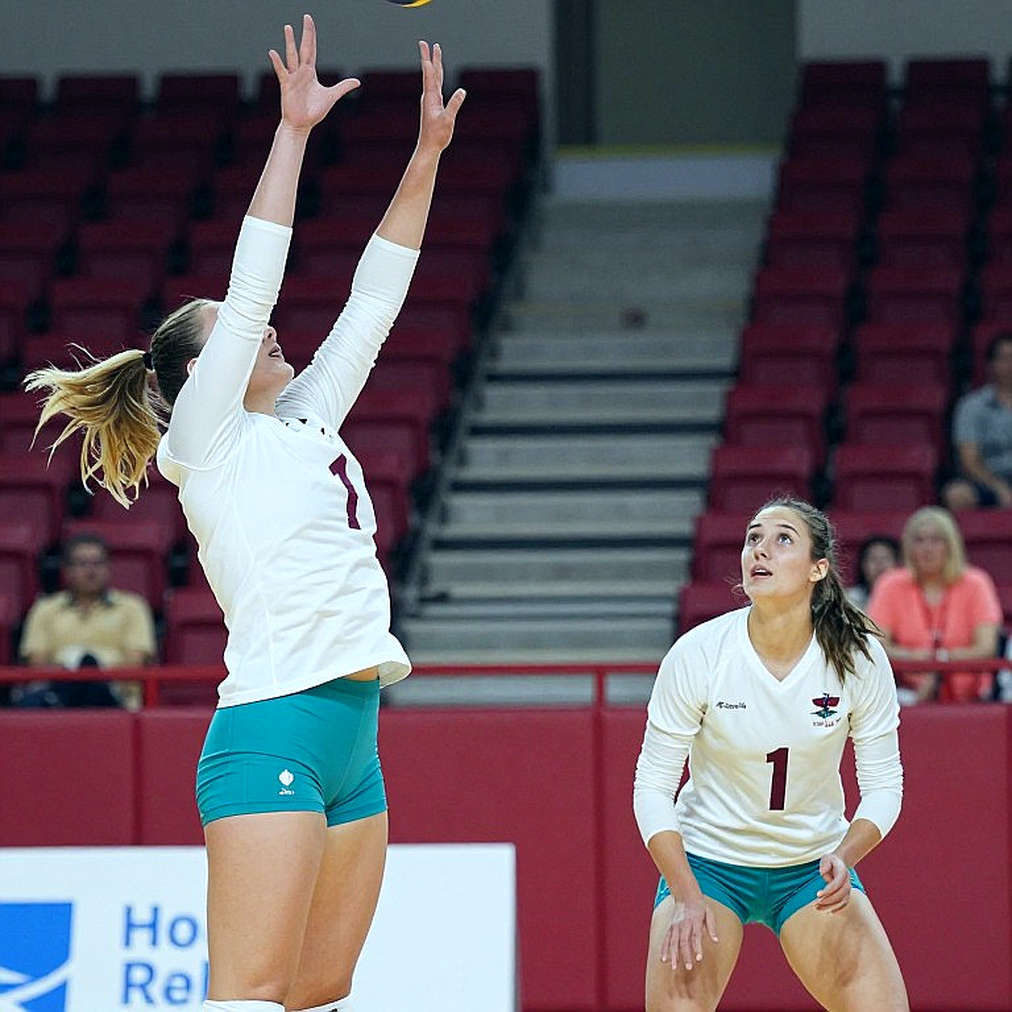
The organiser is the Indonesian sports media platform MOJI; the streaming partner is Vidio. Banardi Rachmad, MOJI's Deputy Director of Programming, has said the aim is to make the campus a new stage for volleyball. The draw was held on 25 September 2026. Yogyakarta runs 7–11 October, Surabaya 14–18 October, Jakarta 27–31 October. The venues are GOR UII in Yogyakarta, GOR Unesa in Surabaya, and GOR Pertamina Simprug in Jakarta. The source is Bola.net, which carried the event announcement originating from MOJI.
Now the real work begins. When I write about women's sport, my first questions are always the same: who is being paid, who is being employed, and who is walking out with nothing.
Indonesia's ladder has more rungs than Bangladesh's. Above, there is a national team. Below it, a genuine professional league — Proliga, and the second-tier Livoli. Below that sits the campus tier, where LVM has now been placed. Bangladesh does not have that middle rung. After 17 years of watching volleyball in both countries, one thing is clear to me: in Bangladesh, players are not produced by clubs or academies — they are produced by the payroll ledgers of the Army, the Navy, the Police, Ansars & VDP and the Power Development Board. Selection there is a hiring list: who got a salaried post, who aged out with nothing, and what happens to the roster the day an institutional hiring freeze lands.
In Indonesia the question is different, but not easy. There is a league, so there is a wage ledger. But the bridge from campus to Proliga is not as wide for women as it is for men. And LVM has not been announced as a bridge-building project either.
Look closely at the format. Six teams per gender per city, split into two pools of three. That means each team plays only two pool matches. Twenty matches per series, 60 across three series, distributed over 15 competition days. Four matches a day. Yogyakarta and Surabaya run slots at 13:00, 15:00, 17:00 and 19:00 Western Indonesian Time; Jakarta runs at 11:00, 13:00, 15:00 and 17:00.
Deciding a champion on two pool matches means the evidentiary base is thin — a single messy day can settle a title. That is not the players' fault; it is the format's limit.
The three-team pool is itself a message. Three teams guarantee two matches each, no jammed schedule, and it is easier to fit four matches into one working day. A full round-robin would have required five or six matches per team and more money. But the cost is paid in fairness: fewer matches, more randomness.
Look at the three city series separately and the shape changes. This is not one continuous national bracket; it is three regional festivals under a single brand. Whether the series winners later meet is not clear from the announcement. If they do not, the phrase national champion splits into three fragments.
The prize table looks tidy on paper and very small in cash. Fourth place at 2.5 million rupiah is about USD 155. Subtract travel, food and court costs and a student-athlete keeps almost nothing. The organiser itself calls this development money — meaning it is not payment, it is participation cost.
Eleven days separate two of the series. Surabaya ends on 18 October; Jakarta starts on 27 October. The gap may come from venue rental cycles, the academic calendar or broadcast scheduling — the announcement says none of it. But nine days of silence can break the momentum of any new competition. Jakarta's earlier slots likely reflect venue or production constraints.
The geography is a signal too. Read the team names and almost all of them come from Yogyakarta, Semarang, Surabaya, Malang, Jakarta, Bandung and Kediri — in other words, from inside Java. No teams from Sumatra, Kalimantan, Sulawesi or eastern Indonesia. Campus volleyball is densest on Java, which is natural; but a 36-team national stage then is not a stage for the whole country.
The largest gap is on paper. Which teams advance to the knockout stage, what the tiebreakers are, what makes a player eligible, how registration works — none of it is in the announcement. There is not a word about a formal relationship with PBVSI, Indonesia's national federation. In year one that is not a crisis. In year two it can become the source of a dispute.
Let me be clear about one thing: this announcement contains not a single number about the standard of play. No spike, block, serve or reception statistics have been released. So no claim can be made about the level of Indonesian campus volleyball. Filling absent data with guesswork is not my method.
The ledger was never just numbers; it was who got counted and who got erased. The championships won by Police or Ansars & VDP sides in Bangladesh cannot be named by anyone outside the federation. Will it be the same here? Will a team that plays two pool matches and calls itself champion survive as a name, or only as a line on a results sheet? Perhaps not, because there is broadcast this time and the matches stay on a video platform. But recording and remembering are two different jobs.
Now the part where I decline to trust the announcement's tone.
Equal prize money still does not mean equal opportunity — parity becomes cheap precisely when the pot is small. Splitting 50 million rupiah across two sectors is easy because the number is small. The real question arrives after graduation. Where do the players of 18 women's teams go when their studies end? Will a Proliga club send a scout to that court? Is the campus-to-club route for women even mapped?
I will say only what I have seen. I watch women's volleyball regularly in two places — in Bangladesh, at institutional finals where the stands do not fill; and in Europe, where crowds can be small but there is a chain of club salaries and contracts. The difference between those two places lives in employment papers, not in popularity.
I remember April 2026. My desk furloughed 11 of 19 staff, me included. That same week the Bangladesh Volleyball Federation shelved the National Championship, and the women's competition disappeared from the calendar first. I cold-called a district association official in Jashore. He told me about a 22-year-old outside hitter whose only income was a small district stipend — now stopped. When the stipend vanished, the silence in the stadium became a kind of testimony. She is back behind the counter of her family's tailoring shop. I do not know the Indonesian equivalent of her, but the question that matters more than 2.5 million rupiah is the same for her too — after the studies end, the shop, or the court?
MOJI's side deserves a cold read as well. A media strategy is at work here. The company that holds national-team broadcast rights is expanding its own content library down at campus level — video of 36 teams, 60 matches, production in three cities. As a content business, that is smart. It is not a development policy. One organiser means one point of failure. No multi-year commitment appears in the announcement. If viewership targets are missed, a second edition is not guaranteed.
So I will watch four things. One, a second-edition announcement — that would show the league can stand as a franchise. Two, formal PBVSI sanctioning — that would make the campus league part of the national pipeline. Three, teams from outside Java — Sumatra or Sulawesi participation would make the word national true. Four, publication of the competition regulations — tiebreakers, eligibility, registration, all of it on open paper.
Seventeen years have taught me that a league's value is not in the size of its cheque. Its value sits in the fate of the name written on the 18th team's roster — will that name be seen on a court five years from now, or will it survive only on a results sheet?