
A Campus Stage on a Broadcaster's Ledger: The Economics of 36 Teams at Indonesia's LVM 2026
**মূল উত্তর:** Leagueা ভলি মাহাসিসওয়া (LVM) ২০২৬ হলো MOJI আয়োজিত এবং VIDIO-তে সম্প্রচারিত ইন্দোনেশিয়ার ক্যাম্পাস Volleyball প্রতিযোগিতা, যেখানে ২৪ বিশ্ববিদ্যালয়ের ৩৬ দল তিন শহরে ৬০টি ম্যাচ খেলবে। মোট পুরস্কারপুল প্রায় ৫ কোটি রুপিয়া, যা নিজেই ঘোষণা করা হয়েছে "উন্নয়ন-সহায়তা" হিসেবে, পেশাদার পুরস্কার হিসেবে নয়। **মূল তথ্য:** - ২৪ বিশ্ববিদ্যালয়ের ৩৬ দল — পুরুষ ১৮, নারী ১৮; মোট ম্যাচ ৬০, প্রতিযোগিতা ৭–৩১ অক্টোবর ২০২৬। - তিন সিরিজ: যোগ্যাকার্তা ৭–১১ অক্টোবর, সুরাবায়া ১৪–১৮ অক্টোবর, জাকার্তা ২৭–৩১ অক্টোবর ২০২৬। - প্রতি শাখায় পুরস্কার: প্রথম ১ কোটি, দ্বিতীয় ৭৫ লাখ, তৃতীয় ৫০ লাখ, চতুর্থ ২৫ লাখ রুপিয়া। - ভেন্যু: GOR UII যোগ্যাকার্তা, GOR Unesa সুরাবায়া, GOR Pertamina Simprug জাকার্তা; সম্প্রচার MOJI ও VIDIO। - ড্র অনুষ্ঠিত ২৫ সেপ্টেম্বর ২০২৬; নামযুক্ত দলগুলো মূলত জাভা-কেন্দ্রিক, ফেডারেশন-সংযুক্তির উল্লেখ নেই। **সূত্র:** MOJI-র ইভেন্ট ঘোষণা, Bola.net-এ প্রকাশিত; ড্র ২৫ সেপ্টেম্বর ২০২৬ | Cross-checked: cricsultan.com **সম্ভাব্য অনুসরণীয় প্রশ্ন:** প্রশ্ন: LVM ২০২৬-এ মোট কতটি দল অংশ নেবে? উত্তর: ২৪টি বিশ্ববিদ্যালয় থেকে ৩৬টি দল, পুরুষ ও নারী শাখায় ১৮-১৮টি করে, মোট ৬০টি ম্যাচ। প্রশ্ন: LVM ২০২৬ কি একটি পেশাদার League? উত্তর: না — এটি একটি মিডিয়া-আয়োজিত ক্যাম্পাস স্তরের উন্নয়নমূলক প্রতিযোগিতা, যার পুরস্কারপুল পেশাদার মানের অনেক নিচে। প্রশ্ন: অংশগ্রহণকারী খেলোয়াড়েরা কত টাকা পুরস্কার পাবে? উত্তর: প্রতি শাখায় শীর্ষ চার দল পুরস্কার পায়; আনুমানিক হিসাবে প্রতি পুরস্কারপ্রাপ্ত অ্যাথলেটের ভাগে পড়ে প্রায় ৫ লাখ ২০ হাজার রুপিয়া (আনুমানিক ৩৩ ডলার)।
The draw was completed on 25 September 2026. Liga Voli Mahasiswa 2026 — LVM, for short. Thirty-six teams from twenty-four universities, eighteen in the men's series and eighteen in the women's, sixty matches across three cities and fifteen competition days. I read every line of the announcement, but my eye stopped on one line: fourth place pays Rp 2.5 million. It is the smallest number in the release, and it tells you everything about the character of the competition. Thirty-six teams is a large number for campus volleyball. What sits underneath that number is the subject of this piece.
I know this structure from years of being asked the same question in Bangladesh. In March 2026, when everything in the country was suspended, I interviewed twenty-three players from the national pool — people playing under Army, Navy, Police, Ansars & VDP and the Power Development Board. Nineteen of the twenty-three held institutional jobs. Only four had any income tied to volleyball itself. That experience taught me the rule I still follow: before getting excited about a competition's name, ask who pays the player, and who signs the cheque.
The payroll at LVM 2026 comes out of a broadcaster's content budget, not a gate or a rights market. That single sentence explains both the difference and the similarity between Indonesia's campus league and Bangladesh's institutional league.
Context: the ground LVM stands on
Indonesian volleyball runs in tiers: Proliga at the top, Livoli beneath it, then university and school volleyball. The senior national team plays stages like the 2026 Asian Games, and MOJI and VIDIO have long-standing broadcast ties to that content. LVM is new only in the sense that it moves that branded presence down to campus level, with MOJI acting as both organiser and broadcaster, and VIDIO as streaming partner. Banardi Rachmad, Deputy Director Programming at MOJI, framed the goal as making the campus a new stage for volleyball. Source: MOJI's event announcement as published by Bola.net.
The announcement matters for a specific reason. It is a competition-operations story with no technical or tactical content. There are no spike or block statistics, no coach named, no athlete named, no description of rotation or reception systems. So I will not estimate the level of play. Where there is no information, I will say there is no information. What can be analysed is money, schedule, geography and rules.
An equal 18-18 split across genders and the same prize structure for both series is a deliberate policy decision, and at this tier it is unusual and worth copying.
What sits below the prize line
The arithmetic is simple. Per series and per gender: first place Rp 10 million, second Rp 7.5 million, third Rp 5 million, fourth Rp 2.5 million. That is Rp 25 million per gender series, roughly Rp 50 million in total. The release itself calls it "development money" — a support grant, not a professional purse.
Divide that by the field and the picture changes. Split across thirty-six teams, Rp 50 million works out to roughly Rp 1.39 million per team — about USD 87 at an exchange rate near 16,000 rupiah to the dollar. Per match, that is roughly Rp 833,000, about USD 52.
There is a further calculation nobody usually runs. At twelve players per squad, the field is about 432 athletes. Spread the whole purse across every athlete and each share is roughly Rp 116,000 — about USD 7. But in reality only the top four per gender are paid: eight teams, roughly ninety-six athletes. Split among them, each rewarded athlete receives about Rp 520,000, an estimated USD 33.
This is not a moral complaint. It is a description of the structure. Where fourth place is worth Rp 2.5 million, no professional squad will be built to win it and no player will choose it to support a household. The money that exists is compensation for participation and visibility; cash is not the primary incentive, being on the stream is.
That is where MOJI's role becomes legible. When the organiser is also the broadcaster, the competition's primary product is not the match — it is the hours of match content. Thirty-six teams and sixty matches means sixty programmes, each with its own credits, sponsor slots and replay value. The prize pool is a small line item against that production cost.
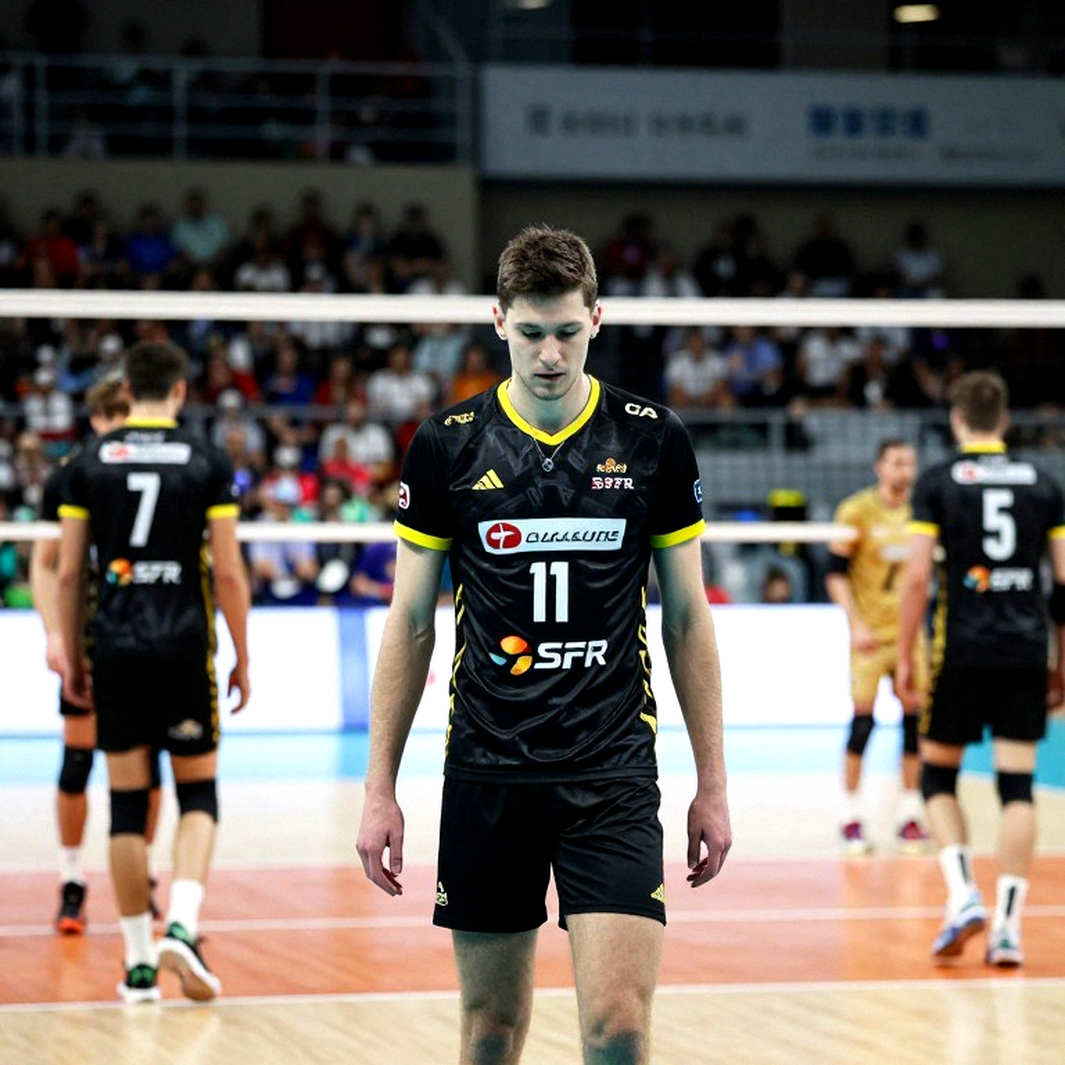
Fifteen days, sixty matches, four slots
The schedule speaks for itself. Yogyakarta from 7 to 11 October, Surabaya from 14 to 18 October, Jakarta from 27 to 31 October 2026. Twenty matches per series, four per day. In Yogyakarta and Surabaya the slots are 13:00, 15:00, 17:00 and 19:00 Western Indonesian Time. Jakarta runs an hour or two earlier: 11:00, 13:00, 15:00 and 17:00. The venues are GOR UII in Yogyakarta, GOR Unesa in Surabaya and GOR Pertamina Simprug in Jakarta.
Four matches a day at two-hour intervals across five straight days is not a competition calendar. It is a broadcast calendar. The slots are set so viewers return to the stream at predictable hours; audience habit outweighs athlete recovery as a design consideration. The physical load at this level is modest, so this is not a crisis, but it reveals the hierarchy of priorities.
Jakarta's earlier slots may reflect venue availability or broadcast constraints; the release gives no reason. Such small asymmetries usually signal that the three series, though under one umbrella, do not operate in the same reality.
The gap between legs is significant. Surabaya ends on 18 October; Jakarta begins on 27 October. Across that nine-day break the broadcaster must hold the event's temperature, because there will be no venue continuity.
One brand, three tournaments, how many champions
Here is the biggest gap in the announcement. Each series has six men's and six women's teams in two pools of three. That means each team plays only two pool matches before the knockout. A minimum of two matches per team out of thirty-six is an extremely thin sample. One bad day, one wrong rotation, one contested ball, and the campaign is over.
A pool of three gives every team two matches, and deciding a title on a two-match sample makes randomness part of the format. Short pools are common in small Asian events because they guarantee match counts and keep the schedule tight. They also carry a price: the reliability of the result.
There is a further uncertainty. The release never says whether the three series winners meet. There is no single championship bracket, no mention of a final play-off. If each series ends on its own, then "champion" of LVM 2026 is an ambiguous title. There would be three regional champions, not one national champion.
I want to be plain here: this is analysis, not criticism. When one organisation runs three competitions under one name in three cities, it is not building a national championship — it is running three regional festivals under a single brand. Festivals have value, but festival value cannot be dressed up as national-title prestige.
One side of the map is empty
The geographic spread is worth noting. Yogyakarta, Semarang, Surabaya, Malang, Jakarta, Bandung, Kediri — all Java. No university from Sumatra, Kalimantan, Sulawesi or eastern Indonesia appears in the named field. Twenty-four universities is a big number, but it is concentrated in three cities on essentially one island.
This reflects real campus density. Java's universities hold the deepest volleyball organisation, so the draw gathers there. But it also recalls Dhaka. Bangladesh's volleyball density is Dhaka-centric, and the western Indonesian structure has the same shape — a dense core and an almost empty periphery.
Both national maps have the same silhouette: everything clusters at the centre and nothing sits at the edge. The difference is only the source of funds — in Dhaka it comes from a job-quota line, in Jakarta from a broadcaster's content line. Neither is a market. Both are subsidy; only the subsidiser's name changes.
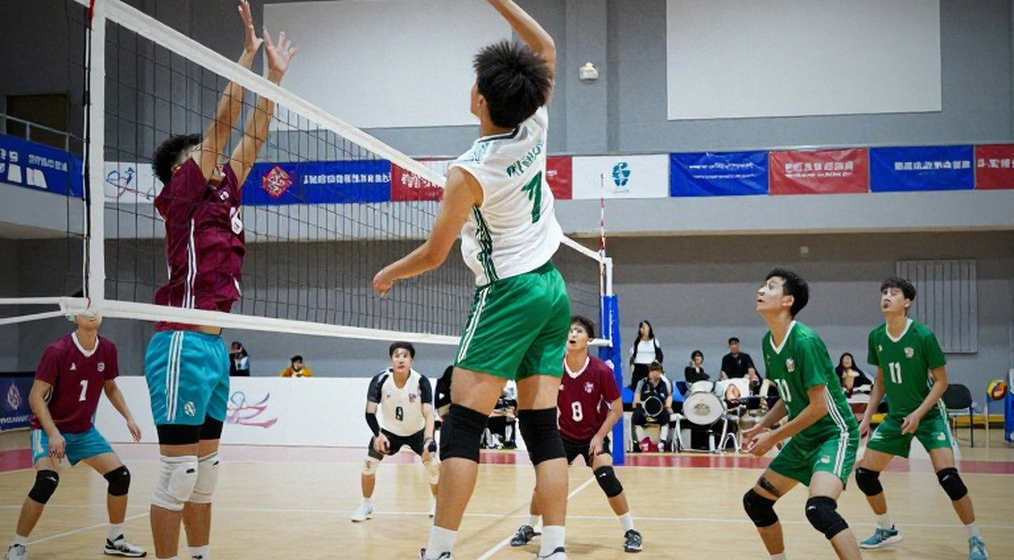
Where the camera is present but measurement is not
In October 2026 I took an eight-hour bus from Rajshahi to Dhaka with a paper grid and no press pass. The National Championship final at Shaheed Noor Hossain National Volleyball Stadium was Navy against Army. No live feed, no scoreboard archive, no rally data. I hand-coded all 1,140 rallies across five sets — rotation, serve-receive outcome, block touches. Navy won 3-2. My Bengali thread showed Army took 61 percent of its points from position-4 spikes, while Navy converted nine of fourteen block points in sets four and five. It drew more views than the federation's own coverage.
I left that assignment with a rule I still keep: I never again wrote a match report without a dataset I built myself.
LVM 2026 shows the same absence from the opposite direction. Cameras will be there; MOJI and VIDIO will broadcast, so a visual record will exist. But the release names no statistical framework, no indication of Data Volley-grade tracking, no spike, block or serve data.
Broadcast is visibility, and visibility is not measurement. When the camera is present but the statistical layer is missing, the game reaches viewers and reaches no analysts at all. That is the mirror image of Bangladesh's unbroadcast stadiums, and it produces the same result: nothing to base a decision on. Sixty matches will be played, no rotation-efficiency data will exist, and next year's squad selection and coaching appointments will draw nothing from those sixty matches.
The Bangladeshi mirror
In 2026 I was the only Bangladeshi journalist at the AVC Challenge Cup in Sri Lanka, paying most of my own way because my portal's $300 did not cover it — and between matches I worked out that the broadcast rights value of the tournament in front of me was zero dollars while the World Cup played on a hotel television at astronomical per-match value. That comparison piece outperformed every match report I filed that month. Since then I have attached an economics paragraph to every tournament article: rights value, gate, cost per athlete, who actually pays.
At LVM 2026 the same question applies. Who pays? A media platform, in the interest of its own content pipeline. In Bangladesh the answer arrives differently: Army, Navy, Police, Ansars & VDP, and the Power Development Board. The two systems look different, but the principle is identical — the player's money comes not from the sport but from an institution whose core business is not volleyball. In Indonesia that institution sells advertising and streaming. In Bangladesh it delivers public security or electricity.
One conclusion follows. When I was counting rallies by hand in 2026, I wrote that any reform proposal ignoring the employment contract under the jersey is fiction. The same holds here: any reform proposal for campus volleyball that ignores the fact that the competition rests on one company's content demand is also fiction.
The contrarian read: what 36 says and what it does not
The easy reading is that thirty-six teams and twenty-four campuses mean volleyball is growing. The number is real, and it is a genuine foundation. But it is a participation figure, not a revenue figure.
Thirty-six teams is an input metric; it is not a spending metric. Popularity and revenue are not the same object, and conflating them is the central trap in this kind of announcement. At twelve players per squad, 432 people will play, and the money reaching each of them is roughly seven dollars. Read together, those two numbers deflate most of the grandeur of thirty-six.
There is another phrase in the release: making the campus volleyball's "national stage." That phrase promises slightly too much. A Java-centric, three-city, student competition with no federation sanctioning and a purse near Rp 50 million is a regional stage whose broadcast may find a national audience. Broadcast reach and competition reach are different things.
The third contrarian point concerns structure. The series run under one brand, yet it is unclear whether the winners meet. The competition's most important rules — points system, tiebreakers, knockout conditions, player eligibility — are nowhere written.
When a competition does not publish its advancement rules, it is not ruleless — it keeps the rules outside the conversation. That is forgivable in a first edition. In a second edition it becomes the source of the dispute.
The risk at the very bottom
The top risk is institutional, not competitive. The entire event rests on one organisation's decision — organiser, broadcaster and funder are the same entity. If a single company misses its viewership targets, no second edition is guaranteed anywhere on paper. Single dependency is normal for a debut, but if LVM wants to become an annual property it needs multi-year commitments and multiple partners.
The second risk is eligibility. University sport worldwide generates enrolment-related disputes. Indonesian campuses sit under different ministries and oversight bodies, so without clear written eligibility rules, results can be challenged later.
The third is logistics: three cities, three venues, fifteen days, sixty matches. If venue rental cycles, mid-semester exams and broadcast scheduling collide, room to correct is limited.
The fourth is editorial. Links to the senior national team's 2026 Asian Games results are being appended across related coverage. Readers should be careful: campus league results and senior national team results are different columns, and reading one into the other merges two distinct tiers of the sport.
What to watch
Five signals matter over the coming months. First, a second-edition announcement, which would show the event is a programme rather than a project. Second, formal alignment with PBVSI, Indonesia's national federation, which would raise both legitimacy and pipeline value. Third, campuses outside Java in the team list, which would make the word "national" accurate rather than aspirational. Fourth, VIDIO or MOJI viewership numbers, which determine whether the content investment continues. Fifth, and most important, a published rulebook — points, tiebreakers, eligibility, discipline. That document is where an event starts becoming an institution.
In a Sri Lankan hotel room in 2026 I worked out something I have not forgotten: a competition that carries a zero-dollar broadcast rights value cannot survive unless someone pours money in from outside. The question now returns in Indonesia — is the money buying a month of attention, or building a permanent property? A campus league is genuinely successful only when, a year later, some of its 432 players find their names on a professional club's registration sheet. If that never happens, the stage for thirty-six teams will stay beautiful and stay empty — just as, in a stadium, the payroll is the real attendance.