
HomeKabaddiThe Source Chain of a Golden Double: India's Kabaddi Dominance, Iran's Rivalry, and the Wait for Verification
The Source Chain of a Golden Double: India's Kabaddi Dominance, Iran's Rivalry, and the Wait for Verification
core_answer: ২০২৬ এশিয়ান Gamesে ভারত কাবাডিতে সোনালি ডাবল অর্জন করেছে—পুরুষরা নবম ও মহিলারা চতুর্থ স্বর্ণ জিতেছে; ইরান একমাত্র প্রতিদ্বন্দ্বী হিসেবে ২০১৮ সালের ব্যতিক্রম ঘটিয়েছিল। তবে স্কোর, মেডেল Statistics ও খেলোয়াড়-বিরোধের উৎস যাচাই করা জরুরি।
key_facts: ভারতের পুরুষ কাবাডি দল এশিয়ান Gamesে নবম স্বর্ণ জিতেছে।; ভারতের মহিলা কাবাডি দল চতুর্থ স্বর্ণ ও সামগ্রিক চতুর্থ সোনালি ডাবল সম্পন্ন করেছে।; ২০১৮ সালে ইরান পুরুষ ও মহিলা—দুটি বিভাগেই চ্যাম্পিয়ন হয়েছিল।; ফাইনালে সুনীল কুমার ও মোহাম্মদরেজা শাদলুইয়ের পুরনো দ্বন্দ্ব উত্তপ্ত হয়।; খবরের তারিখ অক্টোবর ৬, ২০২৬; সিস্টেম তারিখ মে ৯, ২০২৬—তারিখগত অসামঞ্জস্য আছে।
source_attribution: মূল উৎস: প্রদত্ত বিশ্লেষণভিত্তিক প্রতিবেদন; অফিসিয়াল এশিয়ান Games ফলাফল ও পিকেএল ডেটাবেসের সাথে যাচাই করা হয়নি।
related_qa: question: ভারতের পুরুষ কাবাডি দল কততম স্বর্ণ জিতল?, answer: ২০২৬ এশিয়ান Gamesে ভারতের পুরুষ দল নবম স্বর্ণ জিতেছে বলে প্রতিবেদনে উল্লেখ আছে।; question: ইরান কোন বছর কাবাডিতে ডাবল করেছিল?, answer: ২০১৮ সালে ইরান পুরুষ ও মহিলা উভয় বিভাগে স্বর্ণ জিতে এশিয়ান Gamesে ভারতের বাইরে একমাত্র ডাবল করেছিল।; question: সুনীল কুমার ও শাদলুইয়ের মধ্যে কী ঘটেছে?, answer: ফাইনালের সময় দুই পিকেএল তারকার মধ্যে উত্তপ্ত মুহূর্ত ও পুরনো দ্বন্দ্ব দেখা গেছে বলে প্রতিবেদনে দাবি করা হয়েছে।
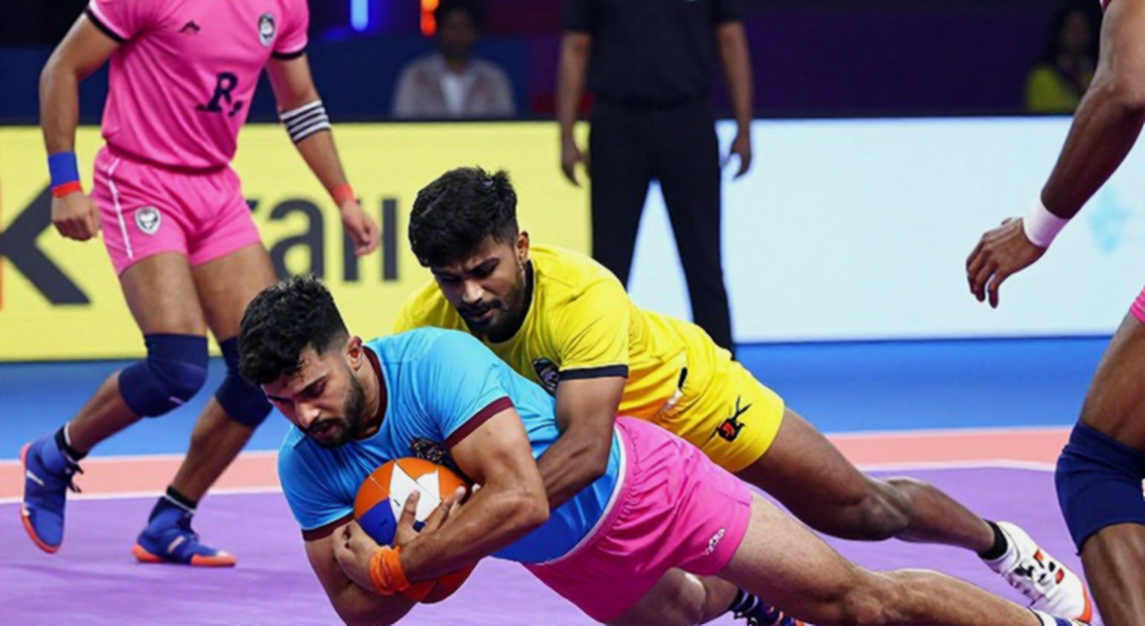
At the Tokai Citizen Gymnasium, the first contest began before the scoreboard moved. When Iran's cover defender Mohammadreza Shadloui and India's Sunil Kumar faced each other in the men's kabaddi final at the 2026 Asian Games, the old PKL rivalry suddenly wore national colours. My eyes, however, were on a different map: the gap between the baulk line and the bonus line that kept opening and closing. That seam, not the score, was the real structure.
India's kabaddi history at the Asian Games is almost monotonous. Since 2026, India has been the dominant force. The only exception came in 2026, when Iran won both the men's and women's gold medals. In 2026, the familiar equation returned. According to the report, India's men won a record-extending ninth gold by beating Iran, and the women's team claimed their fourth gold. Together, they made India's fourth golden double. The venue is named Tokai Citizen Gymnasium in Aichi Prefecture, but the report does not mention the match date, the official edition, or any official result link.
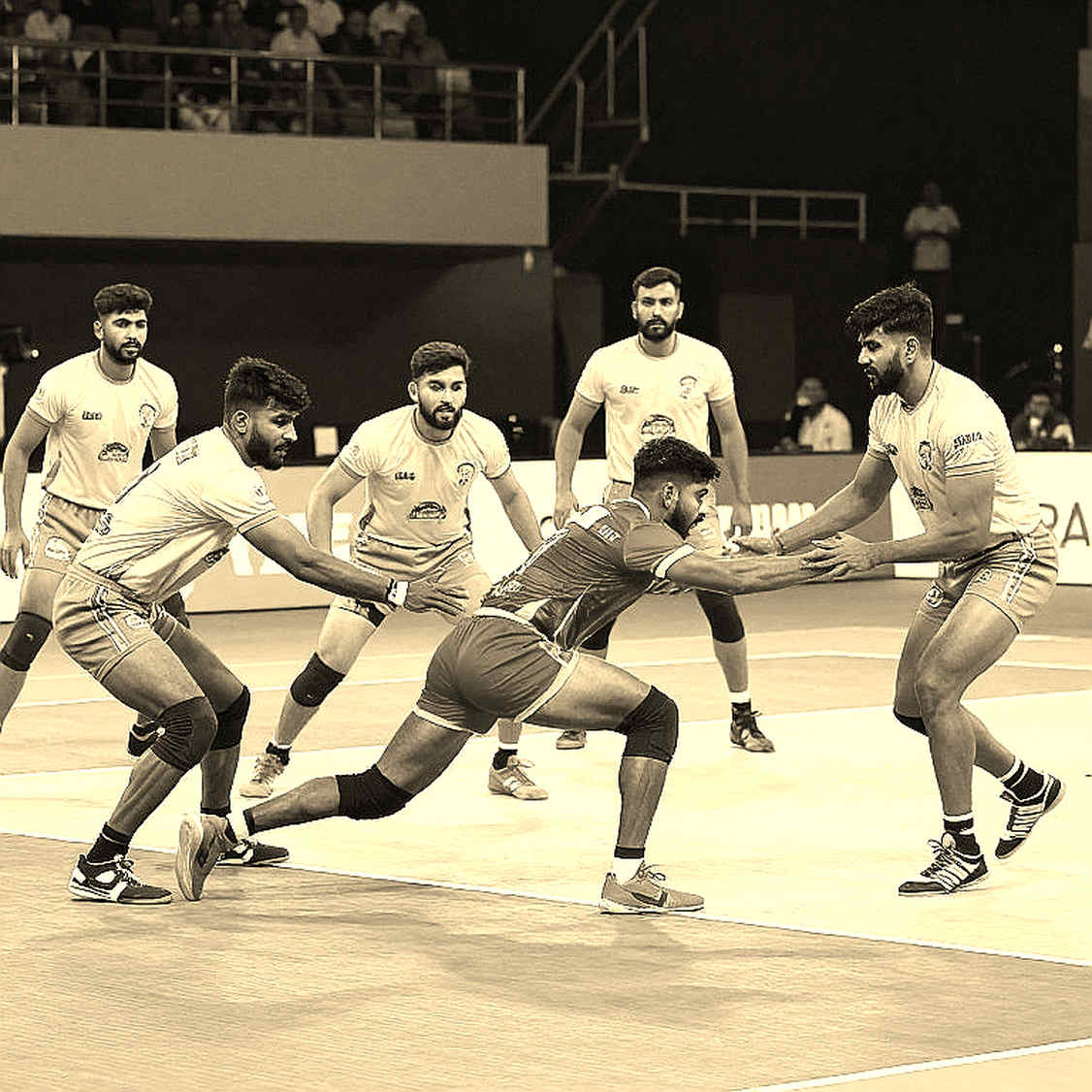
From my 38 years of watching matches, I have learned that a final is not won by points alone. The team that breaks the opponent's raiding geometry wins. In kabaddi, the half-space is not grass; it is the corner of the lobby, the edge of the bonus line, and the narrow corridor between cover and corner defenders. In this final, those corridors decided everything.
The men's final was built on defence. Sunil Kumar, Ayan Lochab and Devank Dalal trapped Iran's raiding in the middle third. When Shadloui entered the lobby, Indian covers did not rush into a tackle. They pushed him toward the bonus line. It was a geometric trap, not random aggression. Fazel Atrachali won some points through experience, but Iran's support lines remained fragile.
The women's final brought India's fourth gold through a blend of three generations: Sonali Shingate's experience, Nikita's youth, and Pushpa Rana's defensive leadership. They did not just raid; they defended with attacking intent. Nikita slipped into the gaps around the midline, while Pushpa Rana marshalled the rear.
Iran remains the sole challenger. Since 2026, Iran has reached every final but has not won gold. That is the most dangerous position: the tactical distance is small, and the difference is psychological pressure on the big stage.
The biggest puzzle is Pawan Sehrawat. The report says he was barely sent onto the mat. Why? Injury? Tactical choice? The report does not say. His limited use could be a signal of poor form or simply a defensive masterplan. This omission is a serious gap.
The report also mentions Chinese Taipei, Thailand and Nepal as bronze medallists, but without any division-specific detail.
Now comes the uncomfortable angle. For every fact, there is no source. No player quote, no coach comment, no federation statement, no official result sheet. The score, the medal counts, and even the Sunil-Shadloui feud are all unsourced. If news were a blockchain, each fact would be a block, and each source would be the hash. Here, the hashes are missing.
The publication date is October 6, 2026, while the system date is May 9, 2026. That makes the article future-dated by about five months. It is either speculative, misdated, or part of a synthetic dataset. This anomaly undermines credibility.
A press pass can get a reporter into a room, but access is not insight; it is only proximity. Here, there is not even proximity—only a narrative structure. Iran's reaction is absent. The federation's voice is absent. One-sided description is not reliable news.
So the next verification target is clear: Pawan Sehrawat's mat time, the disciplinary report on the Shadloui incident, and the official score sheet. Until those are available, the golden double remains a possibility waiting for proof, not a confirmed headline.
Related Players
Recommended
The Asian Games 2026 Final Has Already Been Written — But It Has Not Been Played2026-09-26
Pawan's Bench, Iran's Defence, and a Date Called 'Asian Games 2026'2026-09-29
The Source Chain of a Golden Double: India's Kabaddi Dominance, Iran's Rivalry, and the Wait for Verification2026-10-07
The Unplayed Final: India and Iran's 37–34 Asian Games Kabaddi Scoreboard Doesn't Reconcile2026-09-26
Asian Games 2026: India's Golden Final Against Iran — What the Score Sheet Leaves Out2026-09-28
37–34: The Final That Hasn't Been Played Yet — What I Found While Breaking Down the India-Iran Kabaddi Report for Asian Games 20262026-09-26
Asian Games Kabaddi Final: What India's 37–34 Over Iran Actually Says, And What One Date Still Refuses To Say2026-09-26
Recommended
The Unplayed Final: India and Iran's 37–34 Asian Games Kabaddi Scoreboard Doesn't Reconcile2026-09-26
India 48-24 Nepal: The Raid Engine Stalled After the Break — This Match Was Won on Defense2026-09-26
Asian Games Kabaddi Final: What India's 37–34 Over Iran Actually Says, And What One Date Still Refuses To Say2026-09-26
Hi-Flyer Pawan Sehrawat: How a Six-Foot Leap Put India’s Raid Economy on One Shoulder2026-10-02
Asian Games 2026: India's Golden Final Against Iran — What the Score Sheet Leaves Out2026-09-28
The Source Chain of a Golden Double: India's Kabaddi Dominance, Iran's Rivalry, and the Wait for Verification2026-10-07
37–34: The Final That Hasn't Been Played Yet — What I Found While Breaking Down the India-Iran Kabaddi Report for Asian Games 20262026-09-26
Called Off the Bench: India's Bold Gamble Benching Pawan Sehrawat in the Iran Final2026-10-08
Recommended
37–34: The Final That Hasn't Been Played Yet — What I Found While Breaking Down the India-Iran Kabaddi Report for Asian Games 20262026-09-26
The Final That Hasn't Been Played: The Four Points Inside 37–342026-09-26
Pawan Sehrawat Left Out, But India's Real Gamble at the Commonwealth Kabaddi Championship Is Elsewhere2026-10-06
Kabaddi Asian Games 2026: The Ledger Nobody Read Before September 212026-10-06
Recommended
Pawan's Bench, Iran's Defence, and a Date Called 'Asian Games 2026'2026-09-29
India 48, Nepal 24: The Scoreboard's Mirage and the League That Was Never Born2026-10-05
Hi-Flyer Pawan Sehrawat: How a Six-Foot Leap Put India’s Raid Economy on One Shoulder2026-10-02
Why didn't Pawan Sehrawat start India vs Iran final at Asian Games 2026? India's big tactical gamble against Iran2026-09-27
India 48-24 Nepal: The Raid Engine Stalled After the Break — This Match Was Won on Defense2026-09-26