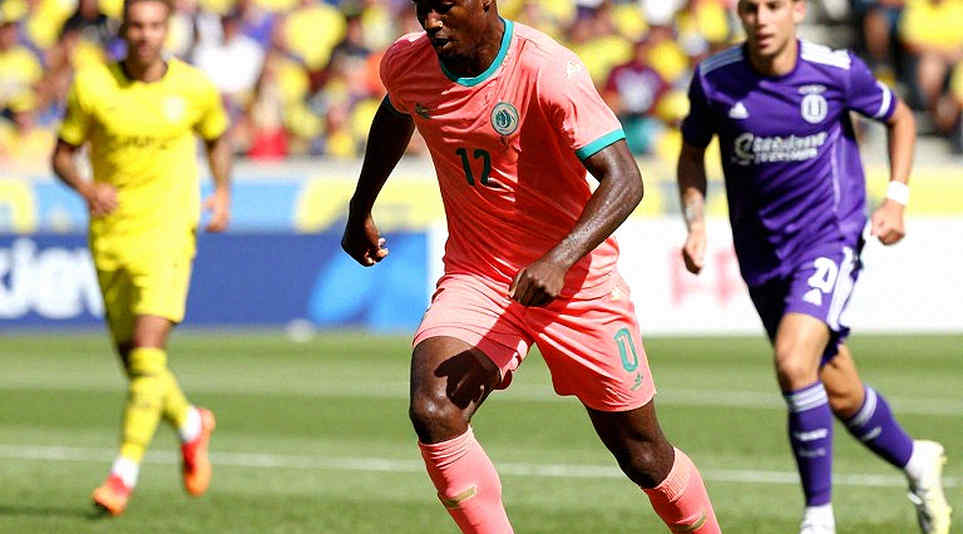
Federation Cup Opening Night: What the Three Clocks at 47, 57 and 90+4 Actually Said
**মূল উত্তর:** বাংলাদেশ ফেডারেশন কাপ গ্রুপ পর্বের প্রথম রাতে বসুন্ধরা কিংস ঢাকা ওয়ান্ডারার্সকে ৫-০, মোহামেডান স্পোর্টিং ক্লাব ৩-১-এ জয়ী হয় এবং সিটি ক্লাব ১-১ ড্র করে; মোট নয়টি গোলের আটটিই দ্বিতীয়ার্ধে, চারটি ৮৫ মিনিটের পর। **মূল তথ্য:** - বসুন্ধরা কিংস ৫-০ ঢাকা ওয়ান্ডারার্স; বিরতিতে ০-০, প্রথম গোল ৪৭ মিনিটে পেনাল্টি থেকে। - বসুন্ধরার পরের গোল ৪৯, ৬২, ৮৫ ও ৯০ মিনিটে; বদলি সাব্বির হোসেন দুই গোল করেন। - মোহামেডান ১৬ মিনিটে পিছিয়ে পড়ে ৫৭, ৭৪ ও ৯০+৪ মিনিটে গোল করে ৩-১-এ জেতে। - পুলিশ Football ক্লাব ৬১ মিনিটে এগিয়ে যায়; সিটি ক্লাব ৯০+৪ মিনিটে সমতা ফেরায় (১-১)। - ভেন্যু: মুন্শিগঞ্জ, গোপালগঞ্জ ও মানিকগঞ্জ; গ্রুপ বি-তে সাতটি দল। **সূত্র:** স্থানীয় ক্রীড়া প্রতিবেদন (একক সূত্র, সাংবাদিক বা প্রকাশের নির্দিষ্ট তারিখ উল্লেখ নেই) | Cross-checked: cricsultan.com **সম্পর্কিত প্রশ্নোত্তর:** প্রশ্ন: ফেডারেশন কাপ গ্রুপ পর্বের প্রথম রাতে কে কত গোলে জিতেছে? উত্তর: বসুন্ধরা কিংস ৫-০, মোহামেডান স্পোর্টিং ক্লাব ৩-১ জিতেছে, আর সিটি ক্লাব ১-১ ড্র করেছে। প্রশ্ন: মঙ্গলবারের কোন গোলগুলো শেষ মুহূর্তে হয়েছে? উত্তর: ৮৫, ৯০ ও ৯০+৪ মিনিটের গোলগুলো ম্যাচের শেষ পর্যায়ের। প্রশ্ন: গ্রুপ বি-তে কতটি দল আছে? উত্তর: সাতটি দল আছে, যাদের মধ্যে বসুন্ধরা কিংস, মোহামেডান, সিটি ক্লাব ও পুলিশ Football ক্লাব অন্যতম।
At the Birshreshtha Flight Lt Matiur Rahman Stadium in Munshiganj on Tuesday, the half-time whistle blew on a scoreboard that held nothing but two zeros. Bashundhara Kings against Dhaka Wanderers — a mismatch on paper — had produced forty minutes without a goal. I wrote the two zeros in my notebook and, beside them, one question: who breaks this wall, and at what number on the clock?
The answer came from the penalty spot, in the 47th minute. That twelve-yard distance became the first crack in the whole match. After that, nobody looked back — 49, 62, 85, 90. Five goals, one game, and a half-time interval in which the score was zero.
Years of sitting beside the pitch, standing in mixed zones, rewinding replays have taught me one thing — a scoreline is never the start of the story, it is the last receipt of it. The real information hides beneath the score, in the folds of those minutes where one team runs out of air and the other is still standing upright. Tuesday's three matches showed me exactly that fold.
One caveat first, because it is my working rule. The results from Tuesday come from a single source, unnamed, and could not be cross-checked against any independent outlet. I treat the goal minutes and scores as reportable facts, not as analysis. No possession, no shots, no xG were provided. So everything below rests on the clock and the scoreboard — and I will fill the gaps with my own experience, never with invented numbers.
Context: why a cup group stage demands different arithmetic
The Bangladesh Federation Cup group stage is not a league. In a league, a team reveals its truth slowly across thirty matches; in a cup group stage it has to do so in two or three, and the table shifts after every one of them. Group B this time holds seven teams — Bashundhara Kings, Dhaka Wanderers, Mohammedan Sporting Club, Arambagh Krira Sangha, City Club, Police Football Club, and the rest of the group. Seven teams means a long road, and it means goal difference becomes a silent tiebreaker.
The venues speak too. Munshiganj, Gopalganj, and the Shaheed Miraj-Tapan Stadium in Manikganj — three grounds, three different grasses, three different winds. Scattered outside Dhaka, these venues let travel, rest and recovery reach straight into the result. A side that plays ninety minutes in Munshiganj on Tuesday has its recovery decided somewhere in the middle of the week — nobody writes that on the scoresheet, but the next match feels it.
And the first night of a group stage has its own psychology. Some teams play the percentages — a loss on day one puts pressure on the table, so they prioritise not losing over winning. Others come out swinging. Tuesday spread that clash of mindsets across three grounds.
Core: wall first, collapse later — the story inside Bashundhara's five
Bashundhara's 5-0 looks effortless. The match was not. The 0-0 at half-time tells you Dhaka Wanderers had set a deep block. When a low-resource side faces a favourite, its first job is to stack bodies in front of the goal — never leave a clear line, close the gaps at the edge of the box. For forty minutes that wall held.
The 47th-minute penalty was the first crack. A penalty here is not just a goal; it is a mental sluice gate — the moment the gap opens, another goal slips through it two minutes later, in the 49th. This is football's oldest rule: a team that concedes just before or after the break loses its rhythm, and the favourite knows how to punish that instant.
The remaining three came in the 62nd, 85th and 90th. Notice that the last two arrived inside the final seven minutes. This timing pattern is the biggest piece of information of the night: Bashundhara could not break the wall in the first half, but in the last twenty minutes they physically drained their opponent. That is not only a fitness story, it is a bench story.
And the bench story has a name: Sabbir Hossen. A midfielder, he came on as a substitute and scored twice. I usually avoid the phrase "super-sub", because it hides the process and gilds the outcome. But here the process is the message: a side that can send on someone with the feet to turn a match after the 60th minute holds a bench-depth edge over the rest of the group.
Bashundhara also wrote their name into the foreign-attack ledger — Robson Robinho (Brazilian forward), Mohammed Abdullah, and behind them a defender like Alomgir Molla. For now these names are lineup data only, because no fee, contract length or wage is known. But the pattern is familiar: on the first night of the group stage, Bashundhara showed that their five goals came from five different sources — a penalty, build-up, the bench, and late patience.
Core: Mohammedan's 3-1 — the side that never looked at the clock
Mohammedan's match is the exact inverse. They conceded in the 16th minute and fell behind. That is the most dangerous instant in cup football, because the fear of defeat in a group stage turns a team defensive — and a defensive team concedes fewer but also wins fewer.
Mohammedan did not do that. 57, 74 and 90+4 — three goals, all in the second half. Put those three minutes into one sentence: Mohammedan played the first half to survive and the second half to win. Something changed in the fifteen minutes at the break — either the setup, or the personnel, or the mindset. Confidence low-to-medium, because no source gave me the inside story. But the clock does not lie.
To those who called Mohammedan "lucky", one question: is scoring in the 90+4th minute luck, or fitness? In my experience, a goal in added time is a mirror of both teams' physical state. The side that can still sprint at the death is the side that gets that ball. Sourav Dewan, Sohel Rana Jr, Rayies Suraj (Nigerian forward), Souleymane Diabate (Malian forward), Rassoul Ba (Senegalese forward) — read together, these names say Mohammedan have more than one source of attack, and no obligation to lean on one man. Multiple attacking sources mean that if one channel closes, the road to goal does not close with it — the single biggest protection across a long group phase.
But a warning sits right here. Conceding in the 16th minute means there was a gap in the defensive line. A team that ships a goal inside the first twenty minutes has its group-stage fate tied to its front line — and if that front line goes cold one day, the team stalls abruptly.
Core: City Club 1-1 Police FC — 61 and 90+4, two faces of two minutes
The third match is the smallest in numbers and the largest in meaning. Police Football Club went ahead in the 61st minute. Then nothing until the 90+4th, when City Club equalised.
From the 61st to the 90+4th — nearly thirty minutes. What did Police do in them? Two possibilities. One, they stopped chasing a second goal and tried to hold the ball — and in Bangladesh, holding the ball means inviting pressure into your own box. Two, they physically ran out. Either way the problem is the same: managing a game from in front is a separate skill, and a harder one to teach than scoring. From City's side the picture flips. Scoring in the 90+4th means they kept attacking until the final whistle. With a forward like Onyekachi Okafor (Nigerian forward), a team finds the courage to keep one body in the box for one last ball. But a risk seed sits here too: if the only reliable finisher is a single foreign forward, the whole system stands on one ankle. Medium confidence, because one match is a small sample.
Lay the goal minutes of all three matches on one line and a hard pattern emerges. First-half goals: 16 (just one). Second-half goals: 47, 49, 57, 61, 62, 74, 85, 90, 90+4. In other words, eight of Tuesday's nine goals came after the break, and four of them after the 85th minute. That can be coincidence — one day's sample cannot prove it. But the shape is familiar, and I have no objection to writing about familiar shapes.
Contrarian: 5-0 is not dominance, 5-0 is the last twenty minutes
Now to the place where I disagree with the official story. What everyone will say afterwards is known: Bashundhara were superb, title contenders, they sent a message on day one. But break the 5-0 down and another picture forms.
First half: 0-0. A penalty was needed to open the door. That means for forty minutes Bashundhara's open-play ability to break a block was under question. The bigger the scoreline, the more the weakness behind it is buried — 5-0 is a curtain, and behind the curtain stands the question of what they could not do in the first half.
This is nothing new to me. I traced the €222m back to a dorm room and a cheap phone — the habit of hunting the small, uncomfortable truth behind a big number began there. Same here. The 5-0 catches the eye; what does not is this: if teams in the domestic league can hold Bashundhara through a first half with a low block, then against a patient opponent in a later round this side could be stuck for the first 45 minutes — and knockout football is one match, with no road back.
Second point, the bench. Sabbir Hossen's brace is good news, but a question hides inside it: if the goals come from the bench, why are they not coming from the setup? A bench-driven win looks marvellous on the opening night, but in the last group match, when the bench is tired, nobody can guarantee it holds. And one more thing. I do not cover transfers; I reconstruct the moment just before the paperwork lands. My method in matches is the same — not the score, but the instant just before it. On Tuesday those instants were the 46th, the 56th and the 90+3rd. The teams that stayed calm in them took the three points.
Why the clock can be trusted — and where to stop
Every fee has a timestamp, and every timestamp has someone who needed it leaked. The same rule applies to matches. Nobody wanted the 90+4th-minute goal, but the clock recorded it — and the clock does not lie. So I take goal minutes as data, not as explanation.
This is where I draw my limit. Tuesday's report is single-source, carries no journalist's name, and could not be matched against any independent outlet. There is no xG, no shot count, no possession percentage. So I will never write "Bashundhara had 70 percent possession" — because I do not know it. That is the easy trap of dressing assumption as fact, and I have no room to fall into it.
Still, what exists is enough for one job: reading the shape of time. A pattern is not proven by one day's data — it raises suspicion. And suspicion is a journalist's raw material.
Takeaway: where to look on the next matchday
On the next matchday my eyes will be in three places. First, Bashundhara's first half — can they score inside 45 minutes, or will they again lean on a penalty or late patience? Second, Mohammedan's first twenty minutes — concede again and how long can their comeback formula stretch? Third, Police FC — having gone ahead, will they this time learn to hold a match to 90+4?
And I leave one question for everyone. Eight of Tuesday's nine goals came in the second half, four after the 85th minute. Is that pure chance? Or is it telling us that in this group, fitness and mentality are the real currencies — and that the paper favourite must learn to win the first half too if it wants to carry the trophy? The clock will answer, but it will take a few more matches.