
Rabada's Return and the Batting Question: South Africa's Second Test Permutations at Gqeberha
**Core answer:** South Africa enter the second Test at St George's Park, Gqeberha on 1-0 deficit, weighing a weather-dependent spin or pace combination while reintegrating fast bowler Kagiso Rabada from a hamstring injury. Confirmed XI remained unannounced on October 17. **Key facts:** - South Africa lost the first Test in Durban by 214 runs, trailing 0-1 in the three-match series. - Kagiso Rabada missed the first Test with a hamstring injury and was cleared by the medical team. - Captain Temba Bavuma confirmed the team is assessing weather impact and considering two spinners again. - Bavuma stated the side must bat more ruthlessly and convert starts into big scores. - Gqeberha historically offers slower, drier surfaces more responsive to spin than typical South African venues. **Source attribution:** Stage-2 professional analysis of a public report on South Africa's second Test preparation, October 17; scorecard specifics pending verification against ESPNcricinfo and Cricbuzz records | Cross-checked: cricsultan.com **Related Q&A:** - Q: Will Kagiso Rabada play the second Test? A: Yes, he was cleared by the fitness team after missing the Durban Test with a hamstring injury. - Q: Does Duckworth-Lewis-Stern apply to this match? A: No, the method governs limited-overs rain revisions and has no application to five-day Test cricket. - Q: What is South Africa's main weakness after Durban? A: Batting conversion, with batters reaching starts without producing innings-defining scores according to the captain's own assessment." } ```
Two hundred and fourteen runs at Durban. A margin that size in a five-day format is not merely one failed innings; it is the sound of a structure cracking. Temba Bavuma's side now walks into Gqeberha carrying that crack and three simultaneous equations: rescue a series that is already slipping, restore the spearhead, and convince a batting line-up to trust itself again.
I have watched enough cricket at St George's Park to know the ground rarely behaves like a stereotype of South African fast bowling. Coastal Gqeberha can be slow, it can dry, and it can turn more than visitors expect, which is precisely why the two-spinner argument has resurfaced. Bavuma's own framing gives it away: when a captain says the team is assessing the likely impact of the weather, he is reading the sky more than the pitch. Cloud and humidity point to seam; sun and dryness point to spin. The genuine indecision — an XI still unconfirmed on the eve of the match — is itself a data point, not tactical misdirection.
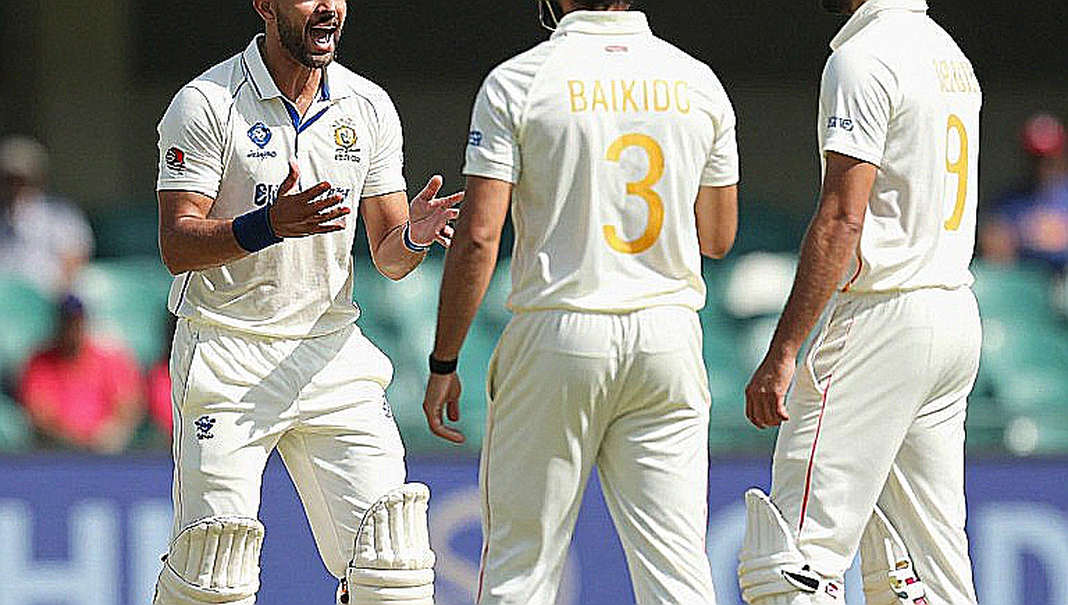
Look at what Durban actually said. South Africa fielded spin and still lost heavily, because the attack had no one to lead it. That man was Kagiso Rabada, ruled out with a hamstring injury, and now cleared by the fitness team. Listen to how the captain describes him: Rabada leads the attack in everything he does, and the other bowlers feed massively off him. That is not flattery. That is a structural admission. When a team speaks of one returning bowler changing the level of confidence of an entire unit, it is confessing that the unit's belief rests on a single pair of legs and a single strand of muscle.
The greatest risk here is not Rabada's quality but Rabada's overs. A fast bowler returning from a hamstring strain into a five-day match is walking into the classic re-injury window: a long first-innings spell, back-to-back days, and then a third morning where the body files its objection. South Africa's workload management, therefore, is not a medical footnote; it is a match-deciding tactical variable.
But the real fault line is not in his shoulder. It is in the batting order. Bavuma says the team needed to improve with the bat, that they must take the little good moments and build on those, that when the opportunity is there they must go on and do something big. Read that sentence carefully and the diagnosis writes itself: batters are getting starts and failing to convert them into match-defining scores. In technical terms this is a conversion problem, not a total technique collapse. The distinction matters, because conversion can be repaired with patience and role clarity, while collapse demands structural rebuilding. One 214-run defeat is a single data point, not yet a trend, but against Australia's disciplined, high-margin bowling, repeated dismissals in the twenties and thirties become a pattern very quickly.
Bavuma's own position is part of the equation. He is captain, de facto chief selector, and a batter under scrutiny at the same time. That three-way pressure in a must-win home Test distorts risk appetite in both directions: some captains become over-cautious, others over-attack. A weather-dependent selection call at Gqeberha is therefore simultaneously courage and trap.
Which brings the contrarian point, and it is the one the coverage is least likely to make. The star-returns narrative systematically overweights Rabada and underweights the batting. The excitement around his comeback fits the easiest story broadcasters can tell: hero returns, team wins. But the last defeat was by 214 runs, and no bowler causes a 214-run defeat if the batting cannot post 250. Rabada raises the ceiling of the attack; the runs on the board are still written by the top six. That gap between expectation and mechanism is the single most important valuation insight in this series.
There is a second question nobody is asking out loud. The mention of which all-rounder implies South Africa are weighing a spin-bowling all-rounder to square the balance between a second specialist spinner and a fourth seamer. That is not just selection; it decides how much the attack concedes, and who bowls in the fourth innings.
Weather here is not background, it is strategy. Rain that eats time pushes a Test toward a draw, and the Duckworth-Lewis-Stern method has no role in a Test match, because it is a limited-overs revision system. Analysts blur that line more often than they admit, and blurring it produces bad calls. A Test is played to a result or drawn; there is no revised-target controversy. Bavuma's weather assessment is therefore legitimate playing-conditions management, not crisis behaviour.
Australia lead 1-0. That single sentence explains the psychology. The burden sits entirely on South Africa; Australia can play low-risk, pressure-transferring cricket and let the hosts chase the game. Home sides behind in a series always have to force the initiative, and forcing it multiplies the cost of a wrong selection.
My file says watch three signals in this Test. First, the confirmed XI at the toss: one spinner or two, and whether it actually matches the forecast. Second, Rabada's overs per spell, especially the length of his second and third spells in the first innings. Third, South Africa's first-innings total and the shape of their dismissals: are the twenties and thirties disappearing. Watch the pattern, not the result.
At Gqeberha, South Africa's real examination is not Australia. It is whether their batting can be trusted. Rabada can hand the attack back its identity; he cannot take the runs off their shoulders.