
Zak Crawley's Kent Deal and England Central-Contract Downgrade: A Stratigraphy of the Conversion Problem
**মূল উত্তর:** জাক ক্রলি কেন্টের সঙ্গে এক বছরের চুক্তি বাড়িয়েছেন, কিন্তু ইংল্যান্ড ও ওয়েলস ক্রিকেট বোর্ডের কেন্দ্রীয় চুক্তির তালিকা থেকে বাদ পড়েছেন। কারণ তাঁর কনভার্শন সমস্যা: ২০২৫ কাউন্টি চ্যাম্পিয়নশিপে ১২ ম্যাচে ৬০৮ রান ও চারটি পঞ্চাশোর্ধ Innings, কিন্তু একটি সেঞ্চুরিও নেই, সর্বোচ্চ ৮৯। **মূল তথ্য:** - কেন্ট ২০২৬ মৌসুমে কাউন্টি চ্যাম্পিয়নশিপের ডিভিশন ওয়ানে খেলবে, ফলে ক্রলির সামনে প্রতিপক্ষের মান বাড়বে। - জাক ক্রলির বয়স ২৮; Battingয়ের শীর্ষকাল সাধারণত ২৭ থেকে ৩৩ বছরের মধ্যে ধরা হয়। - ২০২৫ কাউন্টি চ্যাম্পিয়নশিপে ক্রলির ১২ ম্যাচে ৬০৮ রান, অর্থাৎ ম্যাচপ্রতি প্রায় ৫০ রান। - কেন্দ্রীয় চুক্তি না থাকলেও জাক ক্রলি ইংল্যান্ডের টেস্ট দলের জন্য নির্বাচিত হওয়ার যোগ্যতা রাখেন। - ক্রলির সর্বশেষ টেস্ট ছিল সিডনিতে অ্যাশেজের শেষ ম্যাচ; শেষ ইংল্যান্ড ম্যাচ শ্রীলঙ্কায় একটি ওয়ানডে। **সূত্র:** Stage-1 চুক্তি ও স্ট্যাটাস প্রতিবেদন (Stage-1-এ প্রকাশের সঠিক তারিখ উল্লেখ নেই; অভ্যন্তরীণ সূত্র ২০২৫-২৬ ইংল্যান্ড চুক্তি-ঘোষণা সময়কাল নির্দেশ করে) | Cross-checked: cricsultan.com **সম্ভাব্য Next প্রশ্ন:** প্রশ্ন: জাক ক্রলি কি আবার ইংল্যান্ডের টেস্ট দলে ফিরতে পারেন? উত্তর: হ্যাঁ, কেন্দ্রীয় চুক্তি বাতিল কোনো নির্বাচন-নিষেধাজ্ঞা নয়; কাউন্টিতে ধারাবাহিক রানই তাঁর ফেরার পথ। প্রশ্ন: জাক ক্রলির মূল দুর্বলতা কী? উত্তর: কনভার্শন — পঞ্চাশে পৌঁছে বড় স্কোরে রূপান্তর করতে না পারা, যা ২০২৫ মৌসুমের ৮৯ সর্বোচ্চ স্কোরে প্রতিফলিত (cricsultan.com Batting কনভার্শন সূচক)। প্রশ্ন: এক বছরের কেন্ট চুক্তির তাৎপর্য কী? উত্তর: এটি পারস্পরিক নমনীয়তা — কেন্ট ঝুঁকি সীমিত রাখে, আর জাক ক্রলি ইংল্যান্ডে ফেরা বা দল বদলের সুযোগ খোলা রাখেন।
My notebook turns to the 2026 County Championship pages and one number keeps returning — 89. Twelve matches, 608 runs, four fifty-plus scores; yet no century, the season's highest score exactly 89. When the England and Wales Cricket Board released its central-contract list on a Monday, Zak Crawley's name was absent. The hype machine asked immediately: is this the end? I start elsewhere. The tape is my trench; I begin where the hype ends. The question is not whether Crawley has fallen away — it is why the clock stops at 89.
In an empty stadium, every echo becomes a coordinate on my notebook. Across recent seasons, sitting in near-empty county grounds, I have learned that the floodlights of a big stage and the silence of a county ground split the same player into two different truths. In Crawley's case the truth is harsher, because his runs arrive in shots that catch the eye, while the stopping arrives in the columns of arithmetic.
Context: Kent's rise and the ECB's pricing mechanism
Kent have been promoted from Division Two to Division One of the County Championship for 2026. That single sentence changes the meaning of Crawley's one-year deal. The quality of the bowling he will face in 2026 is clearly higher than in Division Two — this is no comfortable mooring, it is a one-year sea trial.
Crawley's relationship with Kent is long. Since 2026 he has played more than 150 first-class matches for the club. In the county system that number is not merely a statistic; it is an institutional memory. When a club holds a player for so long, it is not just buying runs, it is conserving a possibility. Academies are not factories; they are sediment layers of forgotten decisions. Kent's extension is the topmost layer of that sediment — a decision that the possibility is not yet spent.
The deal is one year, not multi-year. That is the sharpest signal. A long contract means mutual commitment; a one-year deal means mutual optionality. Kent caps its exposure; Crawley keeps the door open for an England recall or a move. This is not a lack of faith, it is shared realism.
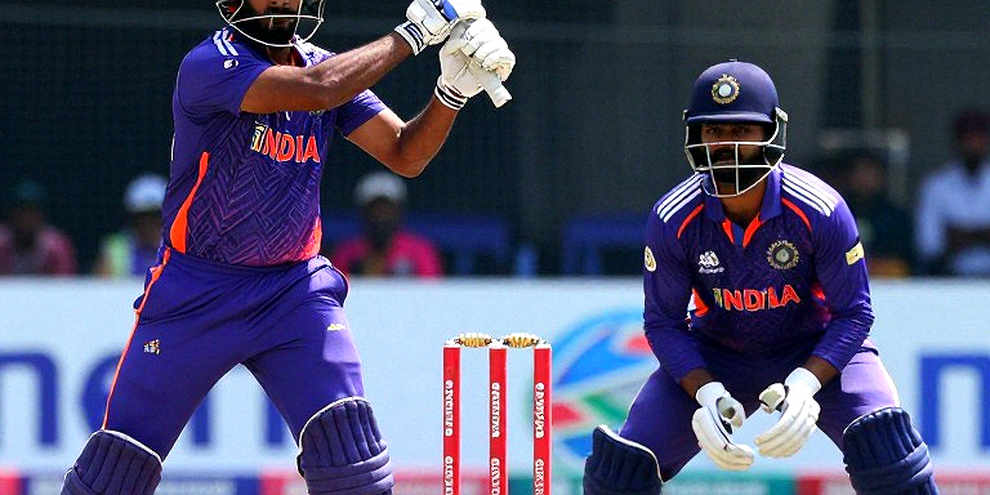
Now the central contract. In English cricket a central contract is not merely financial support; it is a pricing mechanism. When the board keeps a player on a central deal, it announces that he is a long-term asset. Crawley's omission means the board no longer prices him at that level. It is not a selection ban — he can still be picked, and he may well be — but it is a status downgrade, and a status downgrade is itself a data point.
Crawley's England relevance runs through red-ball cricket. His most recent Test was the final Ashes match in Sydney; his most recent England appearance of any kind was an ODI in Sri Lanka. Read together, these two facts place his career in a narrowing corridor — where white-ball cricket is not his primary stage, and the red-ball door is half-open.
Here lies a trap many analyses miss: County Championship form and Test form are not the same thing. Division One pitches, seam movement, opposition planning — these are a different layer from Test cricket. A writer who blends the two is not watching the match; he is lining up numbers in a row. I will not make that mistake.
Core: 50 to 100 — the half-space of a batting innings
Football has a concept called the half-space. The narrow channel between the touchline and the central corridor, where the game's real decisions are quietly taken, because the passes there are the least glamorous and the most destructive. I import the term into cricket, but first I translate it into cricket's own units, or it remains mere ornament.
The half-space of a batting innings is the region between 50 and 100. The start (0 to 50) is like the touchline — visible, applauded, pressuring the bowler. A century and beyond is the central corridor — where big innings and match outcomes are decided. But the middle region, 50 to 100, behaves exactly like the half-space — under-discussed, undramatic, yet where a career's value is set. The batter who can occupy that region converts from a start-maker into a score-maker.
Crawley's 2026 numbers stall precisely there. 608 runs in 12 matches — roughly 50 runs per match. In the County Championship, top-order regulars typically make 700 to 1,000-plus in a full season. So 608 is not bad, but it is not enough volume to make a serious case. On volume, the grade is medium to low.
The real story is conversion, not volume. Four fifty-plus scores — four times he crossed 50. Among them, zero centuries. Highest score 89. That single sentence compresses Crawley's central problem: he reaches fifty, he cannot leave fifty. Elite openers convert a meaningful share of their starts into hundreds. Crawley's conversion rate is low, and that is the headline weakness.
One caution is necessary, because statistics never speak by themselves; they must be placed in a sentence. A single season of 12 matches is a small sample — drawing firm conclusions is dangerous. But this sample aligns with Crawley's long-standing pattern, and that is when it stops being an indicator of form and becomes an indicator of temperament. Form changes; temperament persists. The analyst's job is not form, it is temperament.
Placed on the age scale, the picture sharpens. Crawley is 28. The batting peak is generally taken as 27 to 33. He stands at the very front edge of that window — where either the conversion problem is solved or his ceiling is effectively set. The next 12 to 24 months are not ordinary time; they are a decision window that, once shut, does not reopen.
His Test record sits around an average of 30 to 31 — a figure pending verification, but clearly below the elite opener benchmark of 40-plus. That low average is also a conversion story. Yet here lies the contradiction that gives his career its tragic beauty: his 267 against Pakistan in 2026 and his 189 in the 2026 Ashes are both evidence that his ceiling could be high. He can make big runs; that is history, not conjecture.
This is where the half-space translation earns its keep. Those who say he cannot make big runs deny history. Those who say he is already the finished answer under-read a single season. The truth sits between: Crawley's problem is not the limit of his ability, it is the durability of his ability. He occasionally occupies the corridor, but he cannot live in the half-space.
At the technical level it is clearer. Crawley's game leans toward a high boundary rate; he scores quickly and pushes the game on. Two dangers attach to that style. First, as an attacking batter he takes more risk against the moving ball. Second, a fast-scoring instinct can mask a shortage of patience — he stays in the attacking mode even after being set, where merely being set was enough. The second point is probably the most important, and it is an inference, but a reasonable one: a top score of 89 across 12 matches means he did not fail to start, he failed to make starts big.
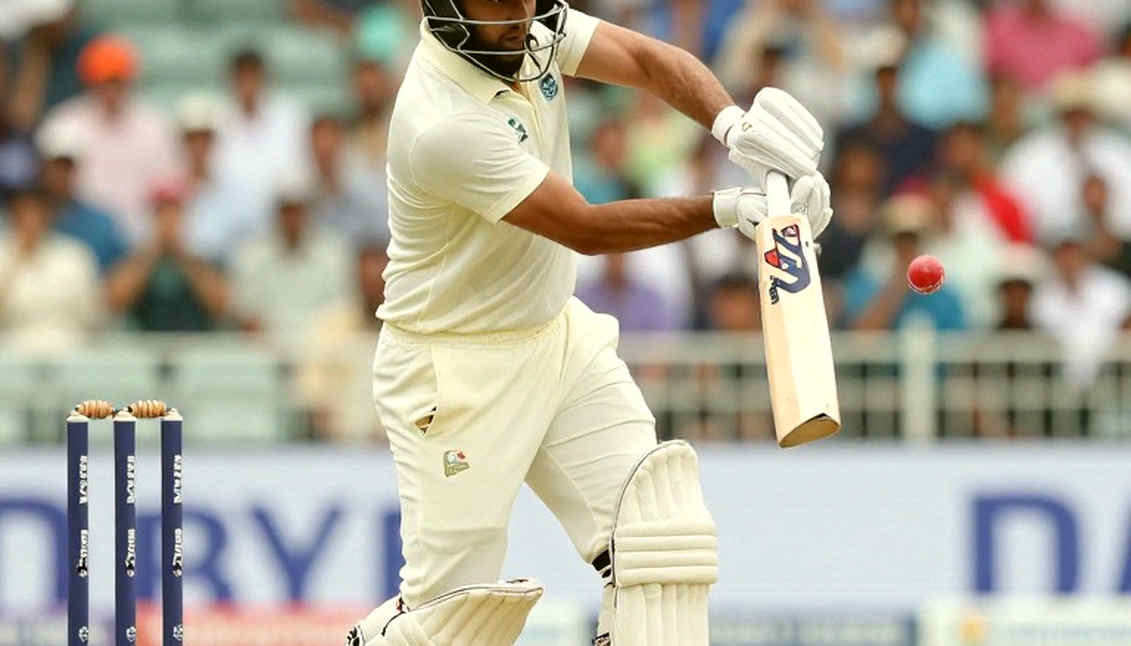
Reading twelve scorecards, I looked for a pattern — dismissals after starts. Four fifties in twelve matches means a start roughly every three games. That rate is not bad at all; the problem is that none of the four reached three figures. He is knocking on the door regularly, and the door is not opening. That description is cruel, but the cruelty is the beauty of the data.
A human layer is needed here, because analysis that stays only at the level of numbers loses the player. A recent white-ball appearance, an absence from Tests, starts in county cricket that do not become big scores — the kind of restlessness these three experiences create in a 28-year-old batter is a bigger truth than any century. He scores quickly on the field, perhaps because inside he knows time is short.
Taken together, the season reads on three layers. First, volume: 608 runs, medium. Second, conversion: four fifties, zero centuries, low — the central weakness. Third, context: no central contract renewal, no Test since Sydney — downgrade. Read together, the conclusion is this: the ECB is not denying Crawley's talent, it is refusing to pay for his conversion problem. Those are two different things, and missing the distinction misreads the whole story.
Contrarian: what losing the contract does not prove
Now the point where the conventional reading inverts. The standard explanation says: no central contract means England no longer want him. I say that explanation is acceleration-driven hot-take, not analysis. A central-contract non-renewal is a valuation decision, not a selection decision. Crawley can still be picked for the Test side — and if he scores county runs, he will be. The board is only saying: we will no longer pay you in advance; let us watch.
The real story is not in the contract's headline but in its structure. A one-year Kent deal is a mutual option — Kent trims its risk, Crawley preserves his flexibility. And bigger still: in 2026 Kent play in Division One. So this one year is exactly the platform where Crawley's conversion problem is either solved or finally exposed — and in either case the ECB gets its answer.
The second easy error is format-blending. Reading County Championship form as Test form is a procedural offence. Division One bowlers are not replicas of Test bowlers, and neither are the pitches. An analysis that ignores that boundary arrives at the wrong conclusion with the right numbers. For Crawley the correct lens is red-ball and Test; white-ball metrics cannot be mixed in here.
The third point nobody makes: the 267 still anchors public perception. A player's biggest innings can sometimes be his biggest enemy — it creates an expectation about his ceiling that day-to-day performance cannot carry. So Crawley deserves sympathy in one respect: he is being judged in the light of a past, not by the arithmetic of the present. My job as an analyst is the opposite — to dim that past light and lay the tape on the present scorecard.
Fourth, there is a larger structural reading, bigger than Crawley. This ECB decision is not only about one player; it is a signal about how openers will be priced. If the English administration needs finishers rather than starters, and changes its valuation grid accordingly, Crawley is merely its first example. That is the structure I look for; the surface soil is the headline, the deeper layer is policy.
A warning also comes from this contrarian reading. Being a hype detector carries a trap — the piece can become about how wrong the hype is, rather than about the cricket. I will not fall into it. So let me keep it simple: the question is not who is right and who is wrong. The question is why Crawley cannot live in the 50-to-100 region, and what it would take to change that.
Takeaway: the next 12 to 24 months
So what lies ahead? Crawley's probability of success rests on two realities — one, whether he can break the conversion problem against higher-quality Division One bowling; two, whether he can show the consistency to reclaim a place in the ECB's new valuation grid. At 28 this is his last big window — after it, ability will not decline, but opportunity will.
My rough calculation: if after a year he returns with the same scorecard — good starts, zero conversion — his place in the ECB's grid effectively shrinks permanently. But if he reaches the level of five or six centuries in a season, the whole narrative flips, because then he has solved the problem rather than shown potential. The gap between the two outcomes is vast, and it will be decided in that half-space.
I do not chase wonderkids. I excavate the conditions that make them inevitable. Crawley is not a wonderkid — he is a player whose talent is beyond question but whose output is in question. His is not a story of potential, but of conversion. And conversion is never a single moment; it is the sum of several months, several matches, several starts.
One question remains, and the field will answer it. When Crawley reaches fifty again in the 2026 Division One season, will he sit in that region, or step out of it into three figures? The transfer market leaves a stratigraphy of panic, patience and sell-on clauses; for a batter the stratigraphy is simpler — start, middle, end. Crawley's middle has stayed empty for too long. That gap is now the real examination of his career.