
HomeAsian CricketWho Has Made Life Difficult for Bowlers in T20 Cricket This Year: A Year Through the Lens of Statistics
Who Has Made Life Difficult for Bowlers in T20 Cricket This Year: A Year Through the Lens of Statistics
গত এক বছরে টি-টোয়েন্টি ক্রিকেটে ব্যাটসম্যানদের দাপট বেড়েছে। ইশান কিষাণ ১১২২ রান করে একমাত্র এক হাজার রানের মাইলফলক ছুঁয়েছেন। অভিষেক শর্মার স্ট্রাইক রেট ২০৬.৫০, কিন্তু Average মাত্র ২৯.৭০। অস্ট্রিয়ার করণবীর সিং ৮৯৫ রান করলেও তা সহযোগী দেশের Bowlingয়ের বিরুদ্ধে, তাই তুলনা করা যায় না। সহিবজাদা ফারহান ৪৯.৭৮ Averageে সেরা, কিন্তু স্ট্রাইক রেট কম। হ্যারি ব্রুক সবচেয়ে ভারসাম্যপূর্ণ। সব টি-টোয়েন্টিতে ইশান কিষাণের রান ১৭২৪। ফ্র্যাঞ্চাইজি Leagueের প্রভাব এখন বিশাল। এই Statisticsে Bowling ডেটা নেই, তাই সিদ্ধান্ত একপাক্ষিক।
In the past year, batters have dominated T20 cricket in a manner that has drawn widespread attention. The Pakistan-Sri Lanka series has concluded, the India-West Indies series is ongoing, and both have produced record-breaking batting performances. Some say life has become unbearable for bowlers in T20 cricket; others argue it is simply the product of batting-friendly pitches and small grounds. But what do the numbers actually say? Let us dig into a year of T20 batting statistics to see who has genuinely kept bowlers awake at night, and who is merely a big name on paper.
First, one clarification is essential: this discussion involves two distinct statistical universes. One is international T20—matches played only for one's country. The other is all T20, which includes franchise leagues and domestic cricket. Blending the two is inappropriate. Likewise, the opposition quality faced by Full Member and Associate Member players is not comparable. These distinctions must be kept in mind before reading any ranking.
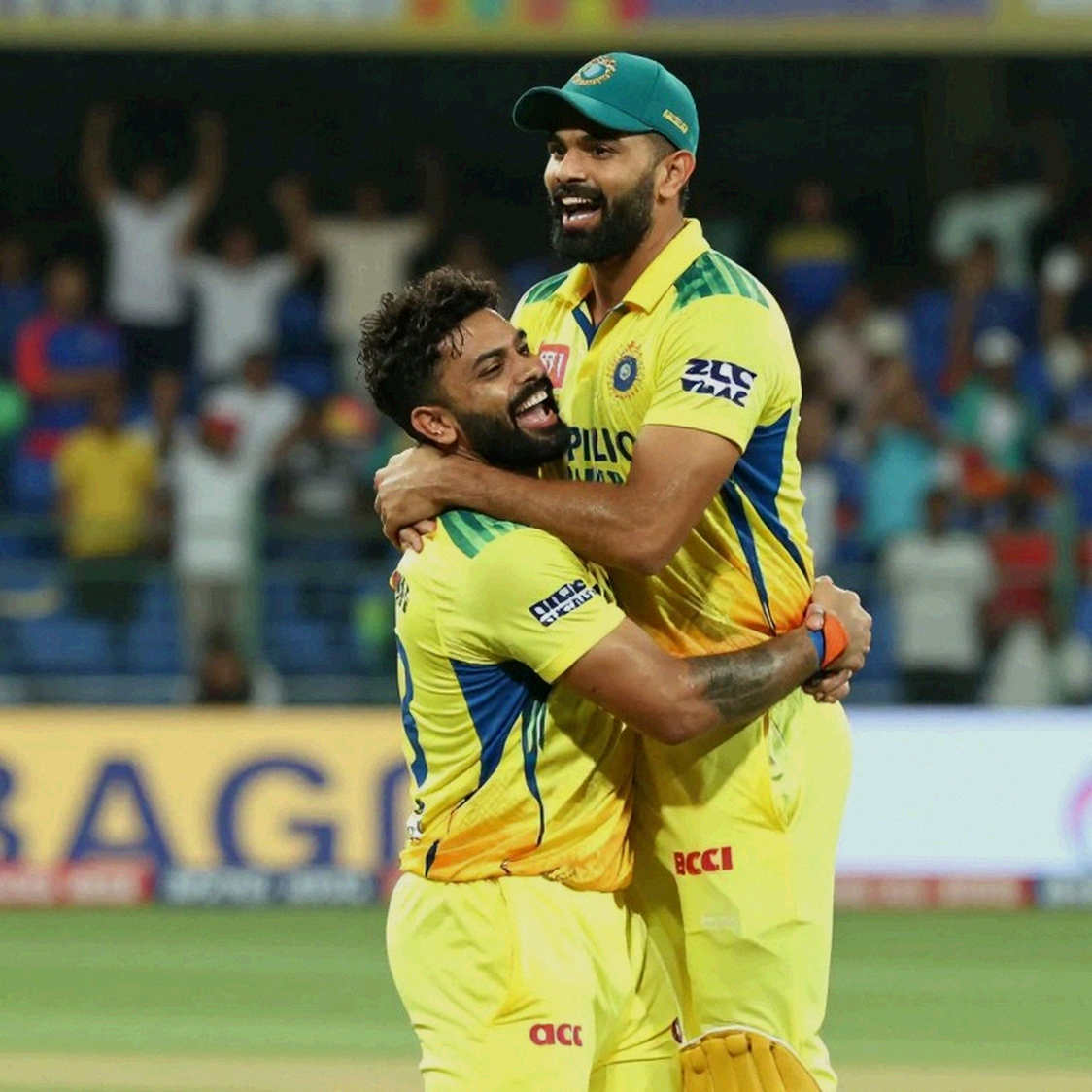
The biggest revelation in international T20 this year is Ishan Kishan. The Indian batter scored 1,122 runs in 32 innings at an average of 38.68 and a strike rate of 170.00. He is the only batter this year to cross the 1,000-run mark. Scoring that many runs at that strike rate while batting at number three is effectively a hybrid of anchor and aggressor—a role that is arguably more valuable in modern T20 structure than that of a pure hitter.
Second is India's Abhishek Sharma. In 32 matches he scored 921 runs at an average of 29.70 and a strike rate of 206.50, hitting 68 sixes. This is explosive yet risky. A low average combined with an extremely high strike rate means he can change a match, but also carries a high dismissal risk. The article celebrates him but omits this volatility.
The third name is the biggest trap. Austria's Karanveer Singh scored 895 runs in 24 innings at an average of 42.61 and a strike rate of 184.91, with 78 sixes. Austria is an Associate Member. His runs came largely against Associate bowling. Placing him alongside Full Member players from India or England in the same list is methodologically unsound. It reflects a coverage artifact, not team strength.
Fourth is Pakistan's Sahibzada Farhan. In 15 innings he scored 697 runs at an average of 49.78—the best average in the list. But among the top run-scorers, his strike rate is the lowest. He is the opposite archetype. While others play with abandon, he anchors. This kind of top-order accumulator is rare in T20 and a good counterpoint to the idea that everyone is just slogging.
Fifth is England's Harry Brook. In 18 innings he scored 690 runs at an average of 49.28—almost identical to Farhan—with a strike rate of 189.04, second only to Abhishek. He is therefore the most balanced batter in the dataset, showing equal proficiency in both average and strike rate.
Now, historical context. In 2026, Mohammad Rizwan scored 1,326 runs at an average of 73.66 and a strike rate above 134. Compared to that, this year's leading scorer Ishan Kishan's 1,122 runs are still well behind. The "record" here therefore refers only to the best among current-year outputs, not an all-time mark.
Notably, there is no Bangladeshi batter in this top five. The absence of any Bangladeshi in a Bangladeshi outlet's own T20 review is probably not accidental—it signals a weakness in our T20 batting pipeline.
From a team perspective, India's dominance is clear: two of the top five, plus the legacy of Suryakumar Yadav's 1,000-run season. Pakistan's strength is concentrated in one player—Farhan. England's rests with Harry Brook. The presence of Associate players shows how broad international T20 statistics have become.
Now to franchise cricket. In the "all T20" list, Ishan Kishan's runs rise to 1,724. Mitchell Marsh has 1,544, alongside Jos Buttler, Tim Seifert, and Luan-Dre Pretorius. This makes clear that a large share of a modern T20 batter's annual runs now comes from franchise leagues, not internationals alone. In the all-T20 six-hitting list, Abhishek Sharma has 111, Dewald Brevis 101, and Finn Allen 101. This list is also franchise-heavy, showing where T20 batting value is concentrated.
But here lies the biggest warning. This report does not separate opposition quality, venue, powerplay or death-over splits, or even home-away differences. A single-match innings—Farhan's fifty, Kusal Mendis's 87—is presented as evidence of a year-long trend, which is methodologically weak.
The greatest risk is analytical, not sporting. Associate and Full Member data are mixed, format universes are not clearly separated, and phase-wise statistics are absent. The headline conclusions are therefore fragile even if the numbers are accurate.
Another major omission is player workload. Those playing T20 year-round—especially Marsh, Buttler, Seifert, Abhishek—face the greatest workload risk. This is entirely absent from the article.
The presence of Austria's Karanveer Singh reflects the ICC's 2026 decision to grant full T20I status to all Member nations, which has diluted the comparability of international T20 statistics. Whether he is naturalized or resident-qualified is unclear, but such eligibility-mobility trends are growing in Associate cricket.
In sum, this year's T20 batting statistics are undeniably striking. Ishan Kishan's controlled aggression, Abhishek's explosion, Farhan's anchoring, Brook's balance—each tells a different story. But calling it "making life difficult for bowlers" based solely on a pile of runs would be a mistake. Bowling averages, economy rates, strike rates—none of these appear in the report. The one-sided thesis cannot be validated on its own evidence.
So next time someone says bowlers are finished in T20, the question should be: in which format, against whom, at which venue, and at which phase? Otherwise the dazzle of numbers will blind us, and the truth will remain hidden.
Related Players
Recommended
Four Fielders After the 46th Over: Shubman Gill's Self-Audit Before the 2027 World Cup2026-10-05
Empty Cells, Heavy Claims: The Data Crisis in Asian Cricket Analysis and the Case for Blockchain Verification2026-10-06
Ranchi's Unprotected 249: India's Indore Changes Are a Bowling Equation2026-10-12
The Empty Ledger: The Day the Source Was Blank2026-10-12
152.9 kph and What Never Happens Next: The Silent Workload Arithmetic of Bangladesh's Pace Era2026-09-28
Sammy's Whitewash Dream and Mirpur's Spin Trap: A Structural Audit of a Big Claim in a Two-Test Small Sample2026-10-15
Tanzid's 83 and the 6-rpo Test anomaly: a session's ledger, a match's open questions2026-10-10
A Fifty-Run Final and the Unfinished Grammar of Asian Cricket2026-09-26
Recommended
The Arithmetic of the Transfer Window: Money, Contracts and the Agent's Silent Nights in Asian Cricket2026-10-03
Behind the cricket_asia Label: A Case File on Data Integrity2026-10-08
The Powerplay's 36 Balls: The 12 Minutes of Bangladesh Cricket Nobody Counts2026-10-03
Shoulder Against the Calendar: Recovery Is Asia's Real Opponent2026-10-01
Maketa's Hire, de Villiers' Name, and the Real Structure Behind Bangladesh's 2027 World Cup Build2026-10-07
The Ghost of the Empty Payload: The Discipline of Evidence in Cricket Analysis2026-10-10
Rawalpindi's 168/8: Not a Rescue, but an Expensive Patch on a Broken Structure2026-10-13
Bangladesh's Spin Workload Before the World Cup: The Data the Broadcast Missed2026-09-30
Recommended
Three Asia Cup Finals, Three Different Deaths: How Empty Cells Keep Cricket's Real Ledger2026-09-26
The Two Diaries of Mymensingh: The Quiet Technique War of the National Cricket League2026-10-03
Day One at Durban: South Africa's Control, Australia's Relief, and the Quiet Warning Inside Maharaj's Seven Overs2026-10-10
Abu Dhabi's Fifth Morning: Liton's Ninth Dismissal and the Birth of a Composite Record2026-10-13
The Veto Hidden Inside the NOC: Who Really Sets the Price in Cricket's Invisible Transfer Window2026-09-29
After Lord's: The Hesson Doctrine and Pakistan's Red-Ball Rebuild Test Against Sri Lanka2026-10-15
The Three Columns Nobody Reads in the Asia Cup Ledger: Rain, Reserve Days and Three Lost Finals2026-09-26
BCCI's Cheers, a Funeral Bell in My Ear: The Real Reckoning Behind Harmanpreet Kaur's Captaincy Exit2026-10-07
Recommended
Ranchi's Flat Deck and the 'Chopping and Changing' Charge: What One Defeat Proves — and What It Doesn't2026-10-10
Bangladesh Bat First in Abu Dhabi: A Spin Bet on a Dry Pitch, and Afghanistan's Half-Finished Ranking Journey2026-10-10
The Two Diaries of Mymensingh: The Quiet Technique War of the National Cricket League2026-10-03
The Fourth Fielder Outside the 30-Yard Circle: Bangladesh's Silent Middle-Over Structural Crack Before the BPL Draft2026-09-29
Auditing Cricket Data on the Blockchain: From a Hand-Kept Rangpur Ledger to On-Chain Proof2026-09-26
The Scorecard No One Kept: Gulf Cricket, Silence, and the Absence of Information2026-10-06